
Known for important Australopithecus afarensis fossils, including the specimen popularly known as “Lucy”.

01Natural historyA singular mammal with remarkable adaptations
02Ancient landscapesThe Great Rift Valley and human origins
03Shared traditionsFolklore, fellowship and a family feast
THE ANIMAL
A specialist in a class of its own
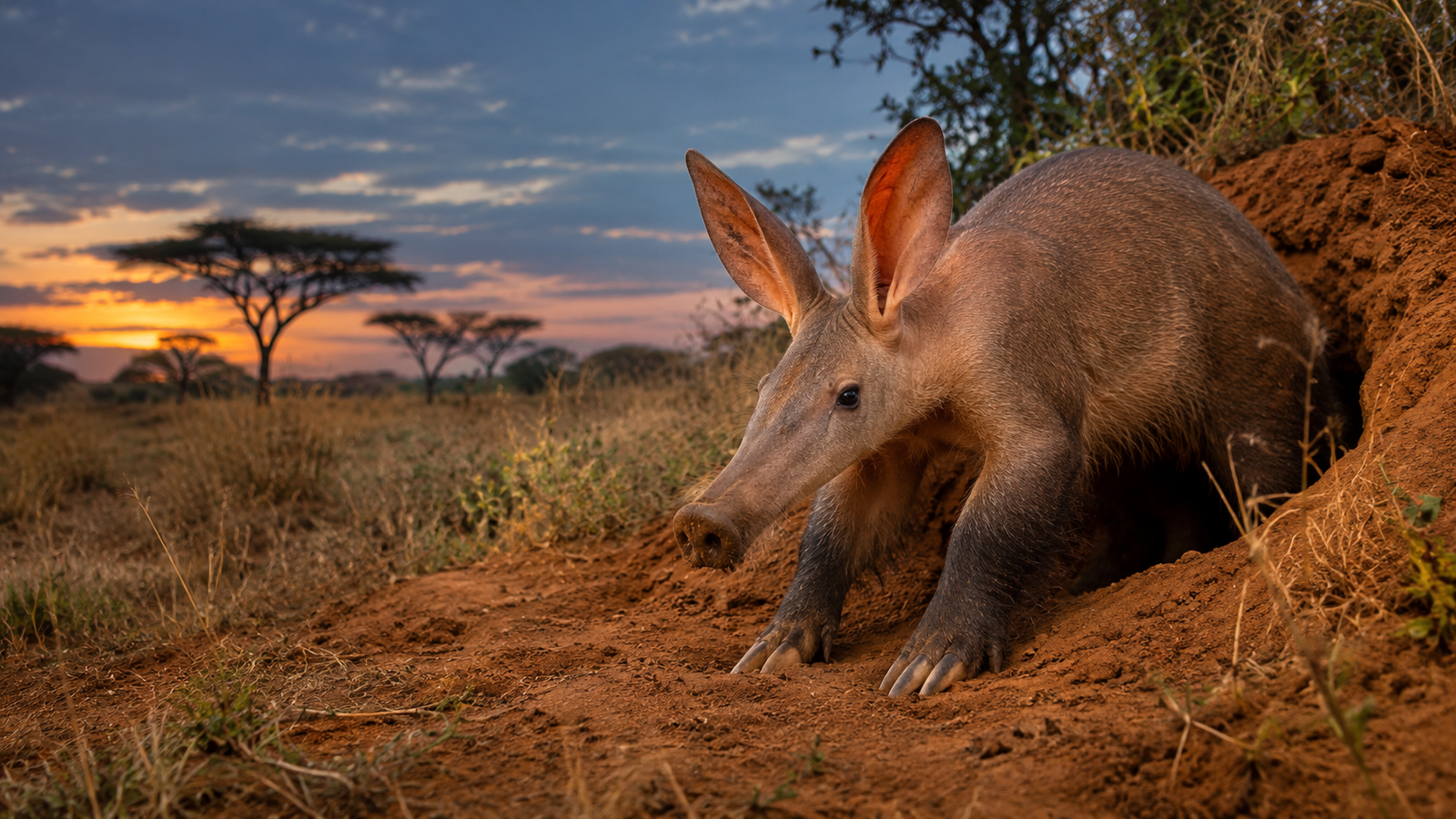
The aardvark (Orycteropus afer) is a nocturnal mammal native to sub-Saharan Africa. Its name derives from the Afrikaans for “earth pig”, although it is neither a pig nor closely related to one.
Its long, mobile snout, highly developed sense of smell, powerful forelimbs and shovel-like claws make it exceptionally well adapted to locating and excavating ant and termite nests. A long, sticky tongue can reach deep into galleries, while its thick skin offers protection from bites.
It is the sole living representative of the order Tubulidentata — a distinctive evolutionary branch with no close living counterpart.
One remarkable measureAn aardvark can excavate a substantial burrow with astonishing speed, using forelimbs built for force rather than finesse.
LANDSCAPE & DEEP TIME
The Great Rift Valley
Did early humans and aardvarks form an unlikely alliance here?
A vast geological system running through eastern Africa, encompassing landscapes central to the study of human evolution and aardvark coexistence.
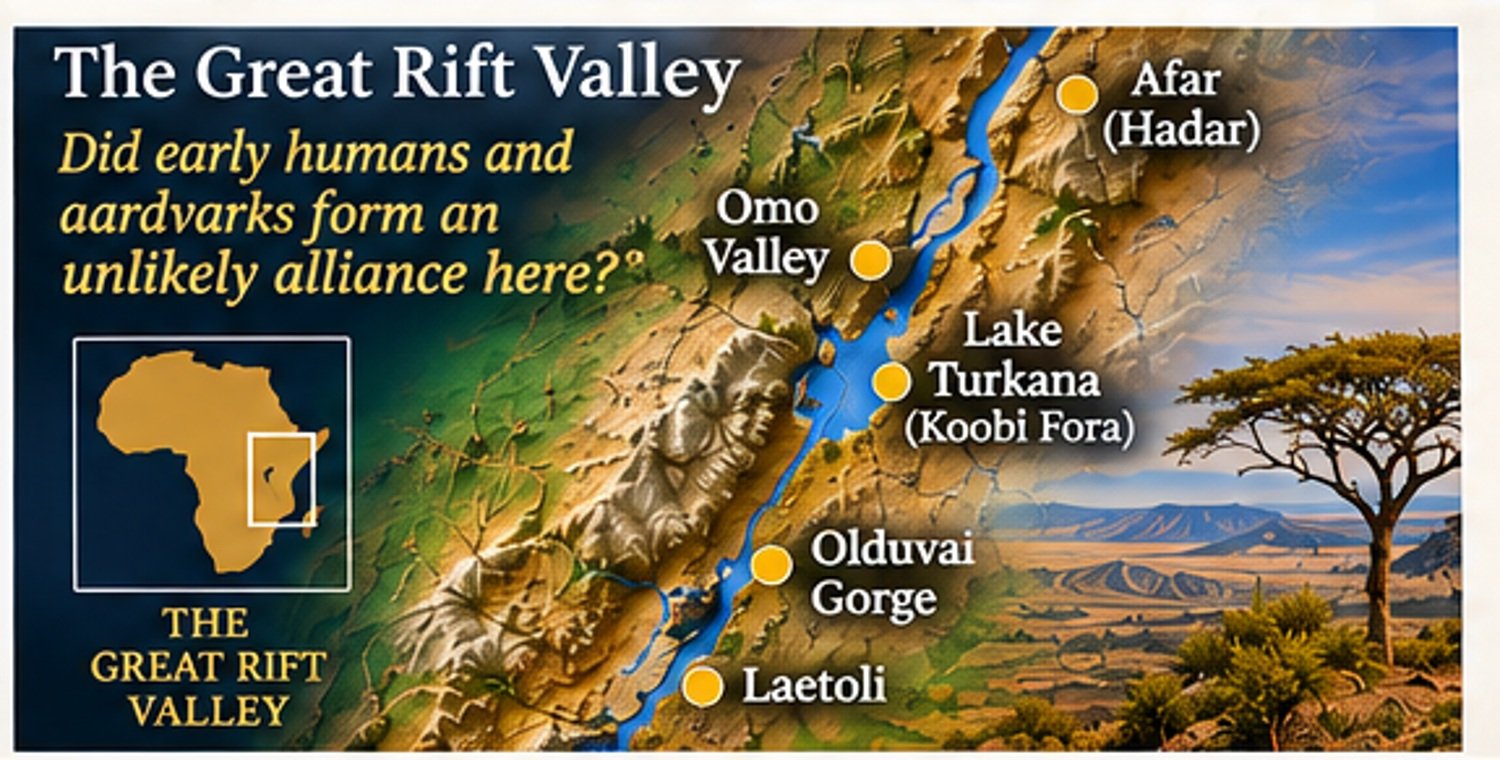
A region with a long record of hominin fossils and archaeological evidence. NAD folklore places early aardvark encounters within this wider landscape; there is weak evidence for the association described in NAD tradition.
Landscapes associated with important discoveries relating to early Homo and other hominins. The NAD account proposes that aardvarks shared these environments; the interpretation is not entirely supported by the archaeological record.
A major archaeological and palaeoanthropological locality, central to the study of early tool-making. The supposed NAD archive also places its aardvark folklore in this wider East African setting.
Famous for fossilised hominin footprints preserved in volcanic ash. In the NAD telling, the surrounding landscape also provided habitat for the aardvark.
The locations and their scientific significance are real. The proposed early human–aardvark association remains a minority interpretation of the available archaeological and environmental evidence.
OUR SHARED PAST
Did early people and aardvarks become unlikely neighbours?
The Great Rift Valley provides the setting for the NAD account of early human–aardvark coexistence. In this telling, the aardvark’s quiet habits, nocturnal foraging and preference for retreat over confrontation made it a familiar, if rarely observed, presence around early camps.
The images and objects below are imaginative reconstructions from the National Aardvark Day Archive. They are presented as part of the Archive’s continuing interpretation of the early relationship.
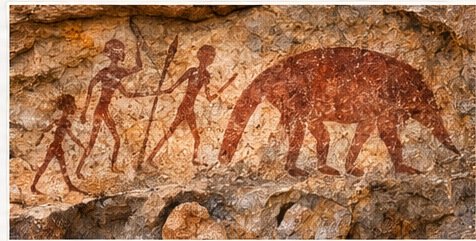
Reconstructed rock-art scene, attributed in NAD tradition to an early East African community. An imaginative reconstruction from the legendary NAD Archive.
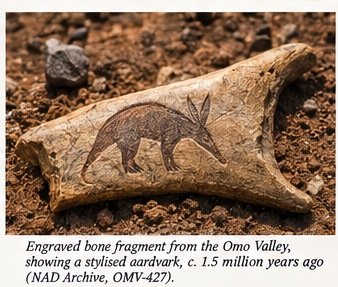
Carved-stone object, provenance recorded as “Rift Valley, exact locality uncertain”. A NAD collection piece, created for interpretive display.

Panoramic view of the Rift Valley landscape, recorded in the NAD field archive as a setting for the early human–aardvark account.

IN CONVERSATION
Professor K. Serah
DSc, FLS · Noted Biologist and Aardacologist
Director, Institute for Aardvark Studies
We spoke to Professor Serah about the aardvark’s remarkable biology, its place in the African ecosystem and the origins of the association celebrated each January.
Professor, what makes the aardvark so unusual?
It is an extraordinary combination of specialisations. The snout is an efficient sensory instrument, the tongue is a remarkable feeding adaptation, and the forelimbs are engineered for excavation. It is a mammal that has committed itself, rather comprehensively, to a particular way of life.
It is sometimes described as a living fossil. Is that fair?
I would be cautious with that phrase. The aardvark is the sole surviving member of Tubulidentata, but it is not unchanged or primitive. It has its own evolutionary history, and its adaptations are very much the product of continuing evolution.
What is its temperament?
It is generally solitary and elusive, and normally avoids confrontation. When threatened, it may dig rapidly, use its powerful claws defensively or retreat into a burrow. It is not a social companion in the usual mammalian sense. One might say it has a strong preference for keeping its own counsel.
How, then, did the ancient association with humans begin?
One must distinguish the established zoology from the traditional account. The NAD account is a minority theory, drawing on suggestive traces and the wider environmental context. Nevertheless, it is not difficult to imagine why an animal that was largely harmless to people, occupied its own burrows and showed little interest in confrontation might have been regarded with some benevolence.
So the aardvark posed no threat?
Precisely. It was not a predator, it did not compete with early people for large prey, and it generally preferred to be elsewhere. If an early group encountered one, the sensible response was probably to let it go about its business. In the NAD tradition, this observation became the basis of a lasting understanding that a little aardvark never did anyone any harm.
Professor Kenneth Serah is associated with the Institute for Aardvark Studies. The interview presents the NAD account, a minority interpretation of the early relationship. The biological explanations draw on established natural history; the historical interpretation remains debated.
EDITORIAL OVERSIGHT
Dr Elena Marlowe
Senior Natural History Adviser
Independent Editorial Review
“The project succeeds when it treats the animal with genuine curiosity and the reader with intelligence. Its strongest material is the combination of accessible natural history, a well-grounded geographical setting and an archive whose claims deserve to be examined with care.”
Dr Marlowe serves as independent editorial adviser to the NAD project. Her comments do not represent an endorsement by National Geographic or any other publication.
THE ANNUAL OBSERVANCE
From aardvark gatherings to human feasts
According to the NAD tradition, the annual gathering began not with people, but with the aardvark. At the close of the dry season, aardvarks were said to converge where food was plentiful, emerging from their solitary routines to forage in the same favoured ground. The gatherings were brief, practical and, to human observers, strangely convivial.
Later generations gave the story a mythic shape. In one much-repeated NAD tale, early families watched these seasonal congregations from the edge of the grassland and came to regard them as a lesson in renewal: return to familiar ground, share what is available and make room for the company of others. The first human feasts, the story suggests, were modelled on this imagined aardvark custom.
There is sparse evidence that aardvarks hold communal gatherings; they are generally solitary. The annual gathering is a piece of NAD folklore, and the human celebration it inspired is very real within the tradition.
Today, 31 January is the occasion to bring family and friends together, share a meal, tell a few stories and honour one of Africa’s most singular mammals.
Plan your observance →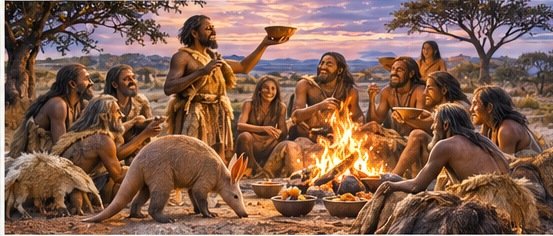
TAKE PART
Make 31 January a date to remember
Gather your people
Invite family, friends or neighbours to share a meal.
Learn something new
Discover the aardvark’s extraordinary adaptations and ecological role.
Share the observance
Tell others about National Aardvark Day and its annual date.